Gold Rush city-management sim focusing on production chains
1849, developed by SomaSim, places you in charge of town growth during the California Gold Rush, tasked with turning mining camps into functioning settlements. The game centers on resource logistics and trade, asking players to balance production chains, manage over fifty resources, and coordinate shipments between towns. It offers a 20-scenario campaign and a procedurally generated sandbox, with hand-drawn visuals inspired by 1850s architecture. Fans of classic city-builders and history-focused strategists gain precise economic puzzles to solve.
1849 foregrounds economic consequence over combat
So, you begin as a town leader in the Gold Rush era where every building placement shifts supply and demand. The core tension is turning raw inputs into higher-value goods and keeping towns productive as population grows. More than fifty distinct resources populate the simulation, so decisions about workshops, mines, and transport directly change local markets and the settlement’s viability.
Campaign scenarios and sandbox maps present distinct managerial tests
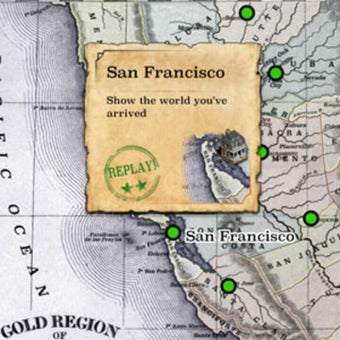
Thus, choice of mode alters objectives: a 20-scenario campaign stages historical challenges across California locations, while sandbox uses procedurally generated maps to vary terrain and resource distribution. A dynamic trade system ties settlements together, requiring coordination of production chains and routes. The design explicitly excludes combat, keeping player attention on civic management and economic problem-solving.
Hand-drawn visuals and historical geography give the world identity
So, the game frames towns with a hand-drawn aesthetic drawn from 1850s architecture and period photography, which makes each settlement feel historically anchored rather than generic. Scenarios reference real California geography and Gold Rush events, adding narrative weight to expansion and placement choices. Thus, players who value historical texture receive visual cues that support decision-making without introducing military elements.
Planning-focused progression rewards methodical players but stays modest in scope
Thus, the simulation extends goals through layered production chains and inter-settlement trade that demand forward planning across scenarios. Replayability comes from the campaign sequence and sandbox’s changing resource maps, which alter logistical puzzles. Community commentary notes the design is simpler than larger modern city builders, so the scope and systems appeal to players who prefer focused economic challenges rather than sprawling construction complexity.
1849 is a measured pick for methodical history fans
1849 suits players who prefer deliberate economic puzzles and a historical setting; the game contains no combat, so seekers of fast action should temper expectations. Its focused scope rewards scenario-based planning and steady problem-solving. Players who enjoy careful supply routing and slower, consequence-driven choices gain the most, while those wanting expansive, high-intensity construction systems may find the design intentionally restrained.